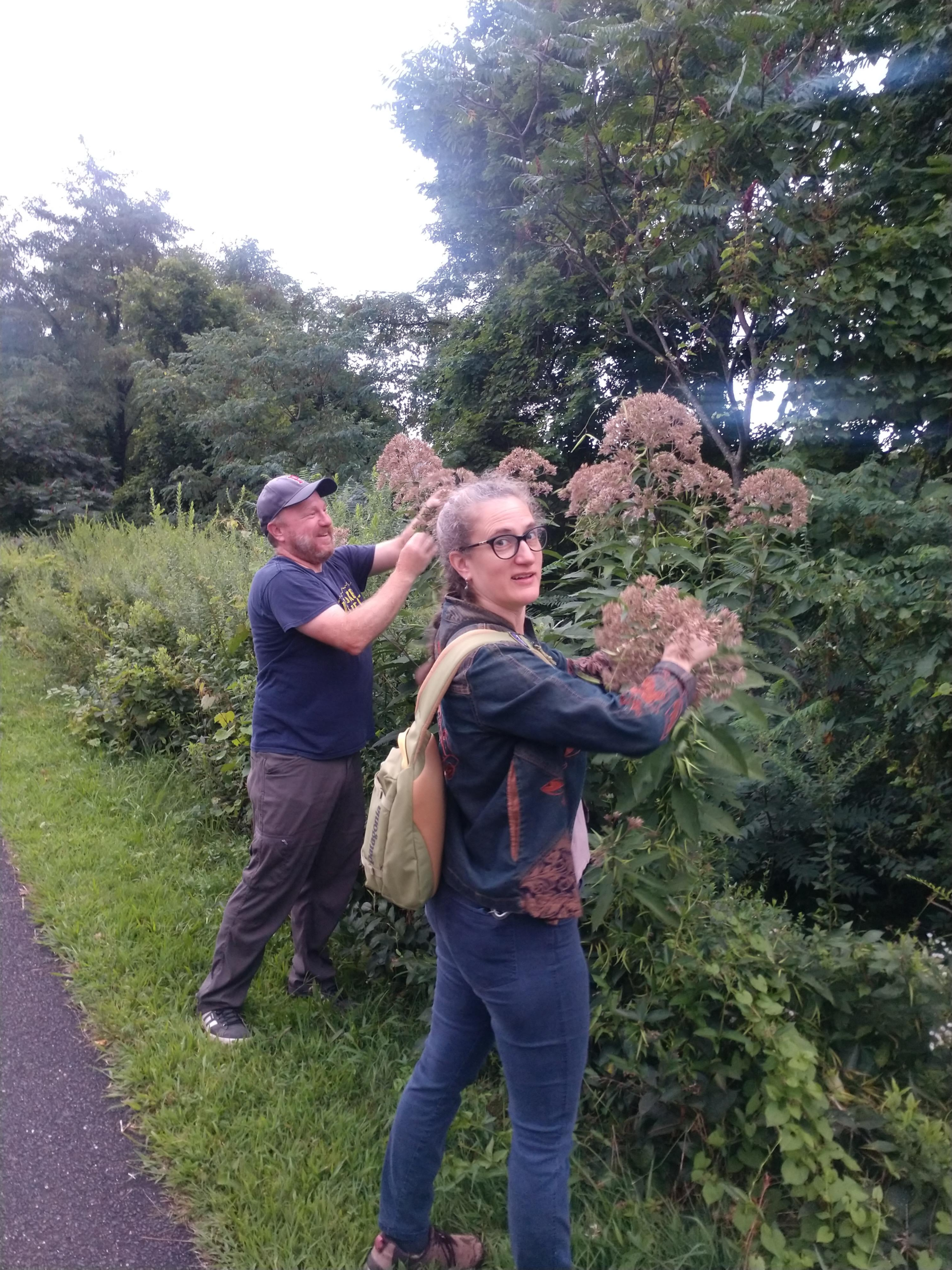
Based on Attend a Native Plant Seed Swap!
Collect native seeds
How do I know if my plants are native?
- Check if your plant is native to our region (Native Plant Trust)
- Prairie Moon Nursery offers maps of where native species naturally grow.
- Check the list of species that are native to Hampshire County
Native to where?
Bring seeds from plants that grow in our ecoregion. Easthampton is in Ecoregion 59, covering most of southern New England. Why does this matter? Many common plants marketed as “natives” are actually from elsewhere in the US, and are different species than our New England natives. They don’t naturally grow here and they don’t actually support other species, like our local pollinators, that co-evolved in this ecoregion. Other common “native” plants are actually cultivars that offer fewer resources for pollinators.

How do I collect seeds? What do I do after I collect them?
- How to collect and store seeds (Lady Bird Johnson Wildflower Center)
- Saving seed from your pollinator garden tip sheet (National Wildlife Federation)
- Collecting and Using Your Own Wildflower Seed (more technical info about seed saving at a larger scale from Xerces Society)
- Include as much information as you can such as the common name (ie Butterfly Milkweed), scientific or Latin name if you know it (ie Asclepias tuberosa), the location, year and month you collected them, and anything else about the seeds or plants you can fit on an envelope. Color and growing conditions are useful, too.
How to collect seeds ethically
The best source to collect seeds is from plants you’ve grown yourself, so you know that they are native and not treated with pesticides. Otherwise, make sure you have permission to collect and only take some of the seeds on the plant.
More info from Attend a Native Plant Seed Swap!:
- Seeds ensure a plant remains in the area it is growing to offer food for the local wildlife. If you have permission to collect seeds or even if you are collecting in your own yard, the general rule is don’t collect more than 5% of the seeds from an individual plant or the population as a whole.
- The growing popularity of native plants makes them at risk for being poached or overharvested in the wild. Taking any part of a native plant without asking on public or private land is not only unethical, but it can degrade the local ecosystem by harming the plant population. It’s not okay to collect seeds (or plants!) in national or state, or local parks. In local parks there is often a team of dedicated volunteers and local organizations that have spent a great deal of time and money restoring the natural areas by removing invasives and adding back native plants that were propagated and/or donated. Taking seeds disrupts the restoration process. Do not collect or bring seeds of rare, endangered, or threatened native plants.
- Do not collect seeds from anywhere that pesticides have been used. No one wants plants or seeds with residual poison on them. Learn more about why pesticides and herbicides, especially neonicotinoids, are especially harmful to bees and other pollinators.